




Trail Life: On Historic Trails, The Land Remembers— America 250th

Updated: Aug 30
Title: The Land Remembers
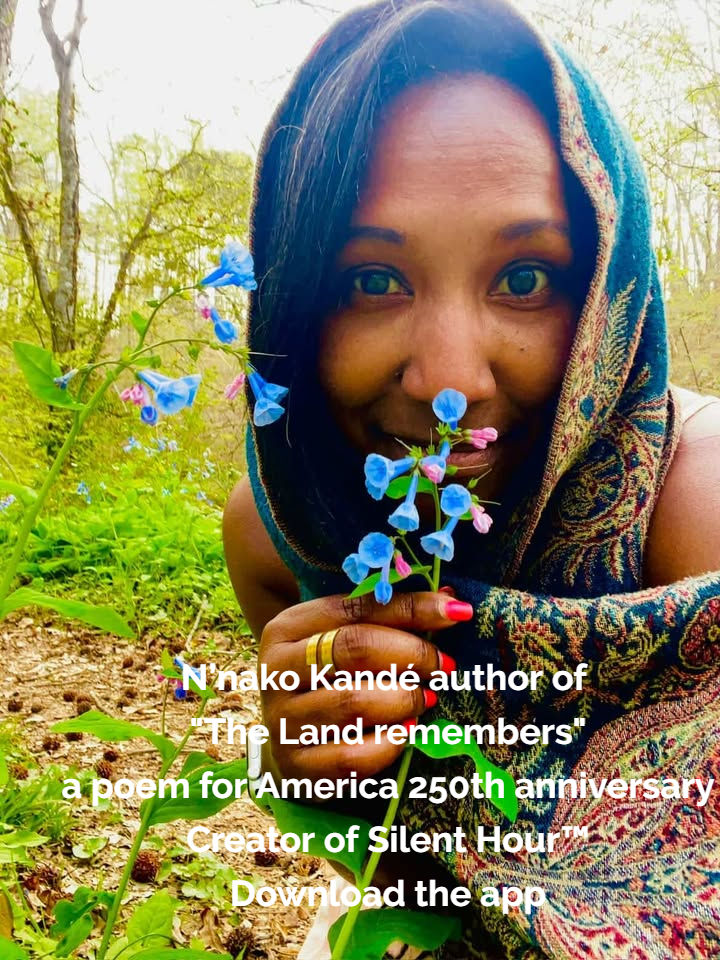
By N’nako Kandé
Some poems arrive like visitors. Others arrive like ancestors. The Land Remembers is both.
I wrote this poem in conversation with the land that has held me, healed me, and shaped me — the South Chickamauga Creek, the forest at Audubon Acres, and the wider homelands whose memory still breathes through the trees.
This piece was commissioned for Chattanooga’s Civic Poetry Pathway in honor of America’s 250th anniversary, and will be installed at Renaissance Park in June 2026. But before it lives on a marker, it lives here — on my own platform — with the full breath, context, and ceremony that shaped it.
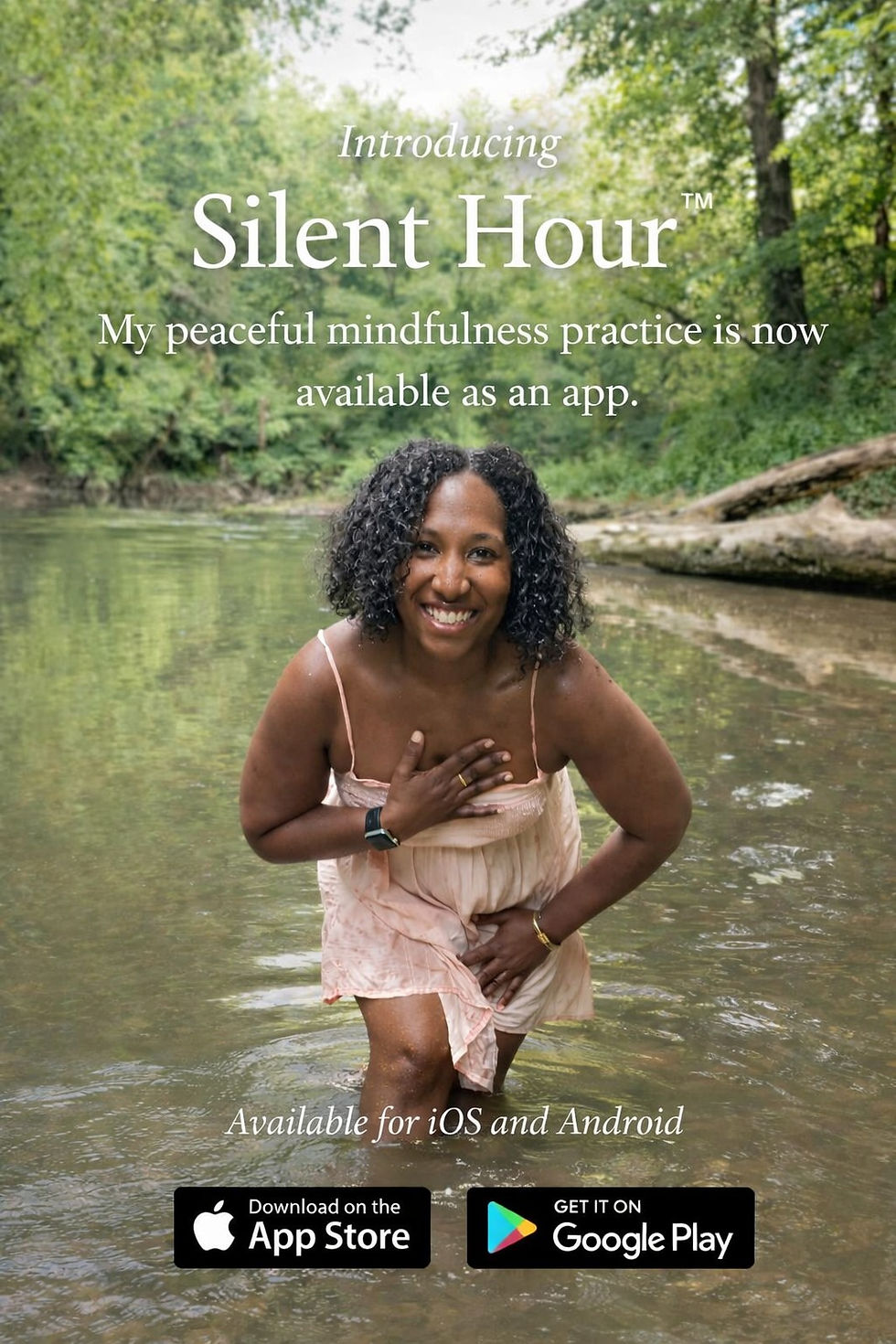
This platform hosts a few ecological series, and this one is a blend of Trail Life × Poet by Nature × Art of Rooting™ and my Silent Hour™ practice.
Below is the poem in its original form, a Q & A, a few Quick Facts & more.

SHORT OPENING INVOCATION
Before I speak, I honor the land,
the waters that remember,
and the elders who stand watch in silence.
I offer these words the way the forest offered them to me—
slowly, gently, with reverence.
I invite you to listen the way the land listens—
with your whole body,
with your breath,
with your remembering.
The Land Remembers
by N’nako Kandé, 2026
La mousse s’étendait comme un tapis déroulé pour m’accueillir —
the moss stretched like an unfurled mat to receive me,
as the roots of a beech tree reached out
to extend their hospitality.
(breath)
The tree stood proud—
an elder,
a knowledge keeper,
a ᏗᎧᏃᏩ (dikanowa), a teacher,
patient, attentive, observing.
(pause)
I sat facing southeast,
kissed by the afternoon sun,
while birds in the distance
sang a chorus:
la terre se souvient — (breath) the land remembers.
(breath)
I sat between sun and shade,
between land and ᎠᎹ (ama), water,
between past and present—
and the river cane whispered:
la terre se souvient — (breath) the land remembers.
(pause)
Through walks, runs,
and my own trials,
we had grown familiar—
because
la terre se souvient — (breath) the land remembers.
(breath)
Maybe it was ma lourdeur du cœur — my heavy heart
that taught us to understand each other.
Maybe it was in the tears I cried
that we became listeners and keepers of the unsaid.
(slow breath)
It was clear:
la terre se souvient — (breath) the land remembers.
(pause)
So I sat 147° southeast,
between land and river,
between sun and shadow,
and the river cane told me again:
la terre se souvient — (breath) the land remembers.
(breath)
I sat as a devoted daughter,
ready to let the tree be my elder,
my ᏗᎧᏃᏩ (dikanowa), my teacher.
(pause)
The beech tree, our elder,
leaning toward the river,
stood like a sentry—
expecting visitors.
(breath)
Still,
la terre se souvient — (breath) the land remembers
that river cane was once a vital giver—
its roots stitching the riverbank together,
its green walls sheltering the small and the winged.
(pause)
At the feet of the elder,
the land taught me to remember.
(breath)
I sat between memories I never lived
and futures that had been stolen,
yet I was to understand:
la terre se souvient — (breath) the land remembers.
(slow breath)
The river collected the tears
of thousands removed unjustly from this land.
The earth stored the footprints
of mothers and daughters—
no longer shielded by their protectors.
(pause)
The river cane sat with me
between land and river,
between past and what future?
It has witnessed it all—
the cruelty,
the sorrow.
La rivière se souvient aussi — (breath) the river remembers too.
(breath)
And I sat there
until the river cane smiled —
avec un message d’espoir —
with a message of hope…
(long breath)
Because the Cherokee and the Muscogee
are tending intentionally
to restore its dignity.
(breath)
Removal and greed
thinned my river cane,
but like a survivor
with a message to pass on,
it spoke louder than memory.
(pause)
La terre se souvient — (breath) the land remembers
that like river cane,
a cane brake is stronger—
the way humanity is stronger
when we work together.
(breath)
La terre se souvient — (breath) the land remembers
that when we tend the land,
the soil tends back to us.
(breath)
La terre se souvient — (breath) the land remembers
that children, mothers, daughters
deserve protectors—
they are the seeds of the future.
(breath)
La terre se souvient — (breath) the land remembers
that if you protect the earth today,
you will be the ancestor
your grandchildren are proud of.
(long breath)
So I sat at the feet of the tree,
where the elder quietly observed me.
With tears on my face,
I pulled my notebook and wrote:
“La forêt est si bonne pour nous — the forest is so good to us.
I wish more people
would benefit from her.”
(pause)
And I cried, wondering—
Will you become listeners and stewards
we can entrust
our lands, families, and nations to?
Are you one?
Would you be one?
.
SHORT CLOSING INVOCATION
May the land remember us kindly.
May the river carry our intentions forward.
May we walk from this place as protectors.

This poem is not only about history — it is about stewardship, lineage, and the responsibility we carry as future ancestors. It is a reminder that the land is not passive. It watches. It holds memory. It keeps records.
And it asks something of us.
Two lines from the poem continue to echo through me:
“If you protect the earth today, you will be the ancestor your grandchildren are proud of.”
and
“Will you become the listeners and stewards we can entrust
our lands, families, and nations to?
These lines are not questions for the reader alone — they are questions for all of us.
Share with me your favorite lines in the comments below and why they resonate with you.


"La mousse s’étendait comme un tapis déroulé pour m’accueillir —
the moss stretched like an unfurled mat to receive me,
as the roots of a beech tree reached out
to extend their hospitality.
The tree stood proud—"


The Land Remembers Q & A
1. What made you choose “Environment & Land / Cherokee removal and land stewardship” as your theme?
I chose land because that’s where my work already lives. I create on Cherokee homelands every day — walking the river, listening to the trees, paying attention to the quiet things. When I saw that theme, it didn’t feel like a topic; it felt like a responsibility. I’m a guest on this land, and I wanted to honor that truth instead of writing from a distance.
2. What personal memory or lived experience were you holding while writing this poem?
I kept thinking about all the early mornings and late afternoon I’ve sat by or inside the water in Chattanooga, letting the land settle me. Those moments have taught me more about democracy, grief, and belonging than any textbook.
I wrote from that place — the place where the land has held me through transitions, questions, and reinventions.
3. How did writing on Cherokee homelands shape the tone or responsibility you felt?
It made me slow down. It made me listen. It made me remember that history isn’t abstract — it’s under our feet. Writing on this land meant I couldn’t treat the theme like an assignment. I had to approach it with respect, with awareness, and with the understanding that my voice is one of many, not the center.
4. What was the hardest part of the poem to write?
The hardest part was finding the balance between truth and tenderness. I didn’t want to romanticize anything, but I also didn’t want to write from a place of harm or extraction. I had to sit with the discomfort long enough to let the poem speak honestly without becoming heavy‑handed.
" The river collected the tears
of thousands removed unjustly from this land.
The earth stored the footprints
of mothers and daughters—
no longer shielded by their protectors.
(pause)
The river cane sat with me
between land and river,
between past and what future.
It has witnessed it all—
the cruelty,
the sorrow.
La rivière se souvient aussi — (breath) the river remembers too.
(breath)
And I sat there
until the river cane smiled —
avec un message d’espoir —
with a message of hope…"
5. What surprised you during the writing process?
I was surprised by how calm the poem felt. I expected it to come out sharper, more confrontational. Instead, it arrived like a steady breath — firm, clear, but not loud. It reminded me that resistance doesn’t always shout. Sometimes it stands still and refuses to look away.
6. What do you hope people feel in their body when they hear your poem on the trail?
I hope they feel a pause. A softening. A moment where the land gets their attention. I hope something in them recognizes that democracy isn’t just laws and systems — it’s the way we treat the places we live, and the way those places remember us.
7. How does this poem connect to your larger creative ecosystem — Silent Hour™, ecological arts, your micro‑films?
Everything I create is rooted in presence, land, and the body. Silent Hour™ teaches people to return to themselves through stillness. My ecological arts practice is about listening to the world around us. My micro‑films capture the small, sacred moments most people overlook. This poem is part of that same lineage — an invitation to slow down and pay attention.
8. What do you want people to understand about democracy that often gets overlooked?
That democracy is not just a political structure — it’s a relationship. And like any relationship, it can be neglected, abused, or cared for. It lives in the land, in the water, in the way we show up for each other. It’s not something we inherit fully formed; it’s something we tend to.
9. What did you learn about yourself as a writer through this competition?
I learned that I can write about civic themes without losing my voice. I don’t have to sound like anyone else. I can stay rooted in land, ancestry, and sensory truth — and still speak to national conversations. That realization felt like a quiet expansion.
"So I sat 147° southeast,
between land and river,
between sun and shadow,
and the river cane told me again:
la terre se souvient — (breath) the land remembers.
I sat as a devoted daughter,
ready to let the tree be my elder,
my ᏗᎧᏃᏩ (dikanowa), my teacher"

Five Quick “Behind the Poem” Facts
1. I wrote this poem in one quiet afternoon, sitting on the roots of a tree facing the creek and the river canes — during one of my Silent Hour™ practices, letting the land speak first.
2. I chose this theme because my creative practice is rooted in listening to the land — the forest, the creek — and honoring the history beneath my feet
3. This is my second time on the Poetry Pathway — I was one of the original twelve poets selected for the first installation at Renaissance Park. Read my poem " Concrete Jungle" here
4. This year’s selection for the Civic Poetry Pathway was competitive for the nation’s 250th Anniversary, and I placed in the Top 16. Not bad for a bilingual francophone born in Abidjan, Cote d'Ivoire (smiles)
5. I submitted only one photo to the Poetry Pathway's official site, but the real inspiration came from many silent hours in the forest that shaped the poem’s tone.
JULY 21, 2026 - UPDATES

It has been almost a month since the Inauguration of the Civic Poetry Pathway at Renaissance Park, and last Wednesday was my first time returning to the site. I had family visiting, and—as I do each time I get to play tour guide—I took my “tourists” to Renaissance Park. I also used the occasion to look for my marker, which had not yet been installed on June 26 during the inauguration.
On the day of the event, a few logistical issues meant that some of the sixteen markers were still pending installation. I was one of the two missing markers, and instead of feeling deterred, I chose to let the moment work in my favor.
One of the landmarks I always return to, and always show my visitors, is the iconic sculpture of the Travelers on the Trail of Tears—standing at the entrance of the half‑bridge facing Ross’s Landing across the Tennessee River.
Because each poet was meant to read beside their assigned concrete marker, my missing marker gave me a kind of serendipitous freedom. I positioned myself directly across from the Travelers sculptures. Before reading my poem to each group, I asked them to turn toward the artwork and observe it carefully—a practice I ask of everyone I guide during my Silent Hour hikes. I wanted them to tune into the art, sense the story told or untold, and listen for what the land might reveal. Only then would I read The Land Remembers with the same emotion that carried the words to me in the forest.
My listeners stood quietly, nodding, receptive to the depth of the message. The Land Remembers was written on Cherokee land. That part of the river is the only place with such an iconic landmark. Ross’s Landing—across from where we stood—is named after Chief Ross, and it is the site of the first displacement of Native people.
I wanted my listeners to understand that even though we were not standing in the forest where my poem and my Silent Hour practice were born, we were still standing on sacred land.

When I returned to Renaissance Park last week, I went first to the location where I had initially been told my marker would be—nowhere near the sculpture. I couldn’t find it and assumed perhaps it still hadn’t been installed. I made my way toward the Travelers, and that’s when I noticed a marker that hadn’t been there before. The concrete looked recently finished. I approached it, standing just feet away from the sculpture, and read: STOP 14.
It took a few seconds for me to register that it was mine.
I cannot fully explain the surprise, the gratitude, and the reverence I felt seeing that my poem now stands in alignment with this iconic landmark. I felt a spirit of acknowledgment—from the land, from its Indigenous keepers, from history itself. I wrote The Land Remembers believing the forest was using me as a vessel, and now I stood before a marker that made me feel like the land was, in its own way, returning the gesture.
I will write a full new article later, but I didn’t want to keep delaying this update and the ones below.
Since publishing the initial post, some beautiful things have unfolded.
In mid‑July, I received a personalized letter from New York City Mayor Zohran Mamdani in recognition of the Ramadan Peace Offering I sent during Ramadan 2026 — a rare spiritual season marked by the alignment of Lent, Ramadan, and Passover. His letter thanked me for each item in the offering, including:
What About Peace: A cultural & humanitarian coloring & activity bookhttps://a.co/d/08qfKdjQ
Salam Islamic & Eco- Cultural coloring & activity book https://a.co/d/0fdoEnJT
The Self-Love Blessing https://a.co/d/07eIkMHm
My cultural notebooks and ceremonial journal " Akwaba! Make it Home"! https://a.co/d/0g49Wn7o
The handwritten peace reflection I enclosed, and a bookmark
It was deeply moving to see that gesture honored with such care.
My Silent Hour™ App has also continued to receive media attention and community support, which I’ve updated in the section below.
And just days ago, the Chattanooga Audubon Society — the region’s oldest environmental organization, and one of the few that uniquely preserves Native American land and heritage — published a newsletter honoring my connection to the land. Their acknowledgment touched me profoundly.
It is with deep gratitude that I watch my reverence for this land find its place in the cultural fabric of Chattanooga — as an artist, a civic poet, an author, a tech founder, and an environmentalist.
Ways to experience Silent Hour™ — by N’nako Kandé
Join me for a Silent Hike and workshop
Order the book on Amazon, or reach out for signed copies, bundles, or author sessions
Download the app and explore Forest, Urban, and Indoors modes from anywhere in the world
On Google Play https://play.google.com/store/apps/details?id=com.silenthour.app&pcampaignid=web_share
On Apple Store silent-hour App - App Store
Learn more about the app by reading recent press mentions and interviews
Local Creator Launches Nature-Based Mindfulness App - Chattanoogan.com
Since I first published this post
The Hamilton County Herald Hamilton County Herald - News
Power 94 Local App Creator Makes Digital Sanctuary to Help Find Peace in a Busy World | Power 94.3 - WJTT FM
Power 94 Brewer Media YouTube Channel Local App Creator Wants To Help You Find Peace In A Busy World



Comments